Torque Limiting Coupler
June 2024
OBJECTIVE:
Create a compact torque-limiting interface between the actuator motor and needle valve that would prevent binding and component damage at travel limits, while maintaining reliable valve control performance, fitting within the existing actuator assembly, and allowing rapid implementation for ongoing control system testing.

PROCESS:
I began by defining key design constraints: the solution needed to fit inside the existing actuator housing, transmit enough torque to fully actuate the valve at operating speed, and allow the motor to continue rotating at travel limits to prevent mechanical damage.
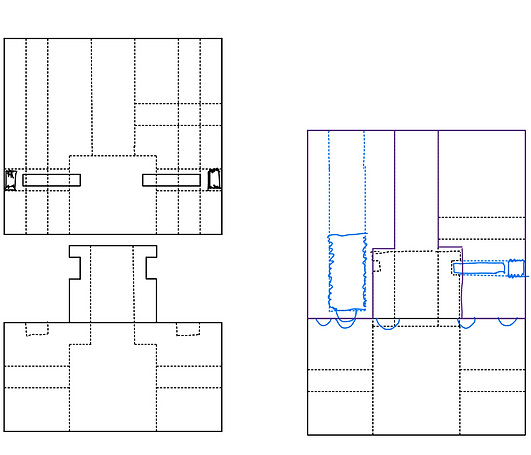
I designed a two-piece coupler connecting the valve stem and motor spindle, as depicted in the concept sketch above. The halves were joined using steel dowel pins to prevent axial motion while allowing controlled relative rotation. Torque limiting was achieved using spring-loaded detents that engaged with mating holes in the valve-side coupler. When torque exceeded a set threshold, the detents retracted, allowing the motor to spin freely.
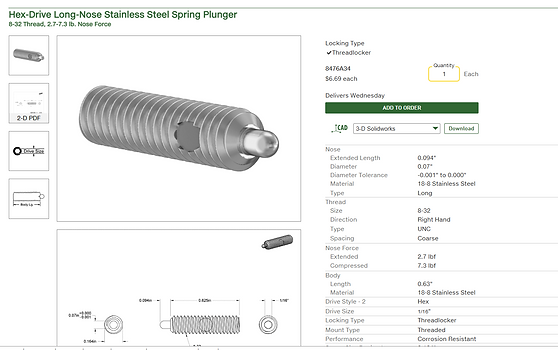
To size the detents, I calculated the minimum required spring force based on valve breakaway torque and friction between mating components. I evaluated torque capacity across a realistic friction coefficient range and selected adjustable spring detents to allow tuning during testing.
The components were modeled in SolidWorks and prototyped using FDM 3D printing with COTS detent hardware.

RESULTS:
The prototype successfully limited transmitted torque and allowed safe motor rotation at valve travel limits. The coupler was integrated into the existing actuator system and used during early PID control testing without causing mechanical damage.
The design was later superseded when the actuator architecture moved to a DC motor with linear potentiometer feedback, eliminating the need for mechanical torque limiting.